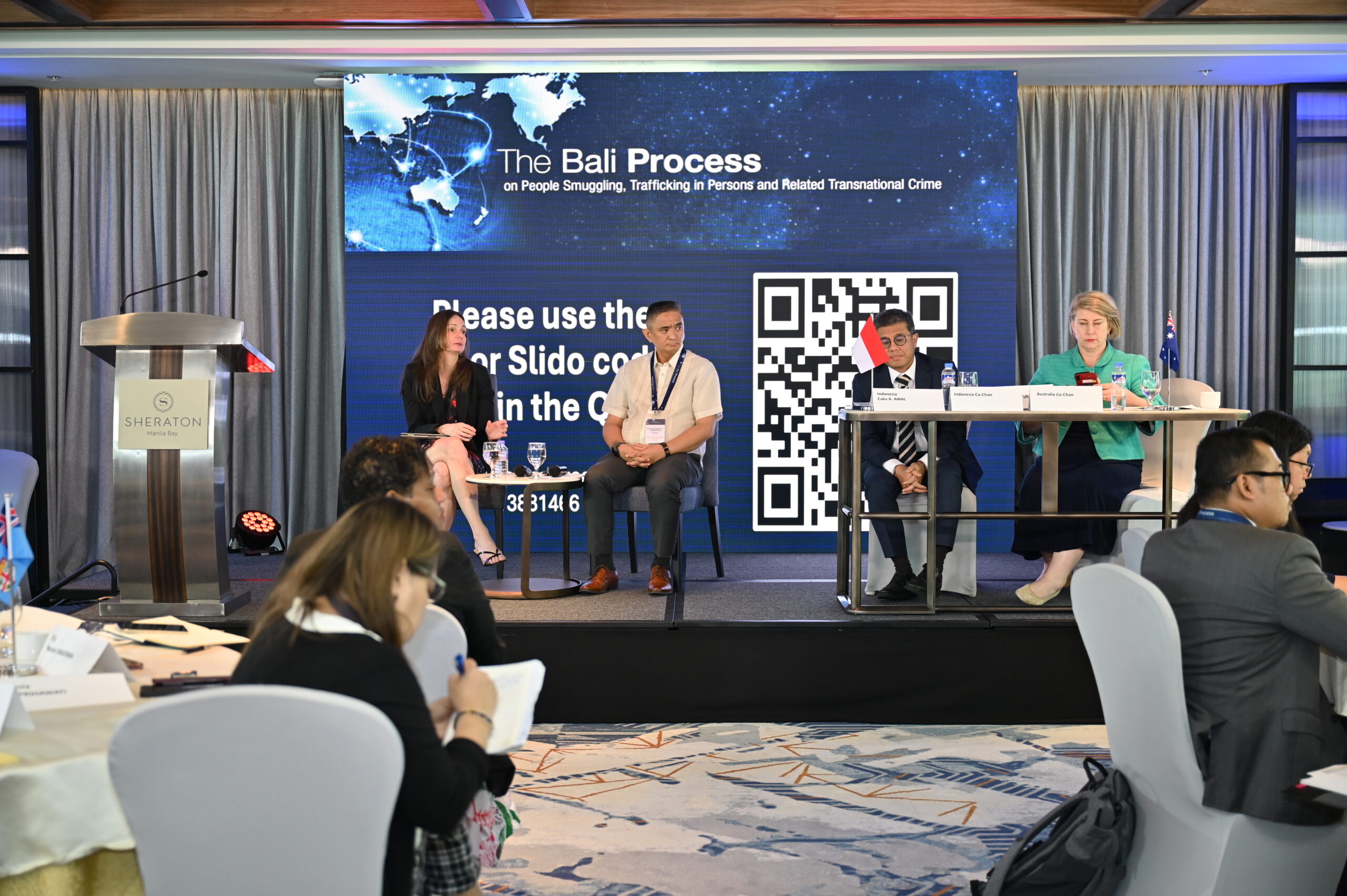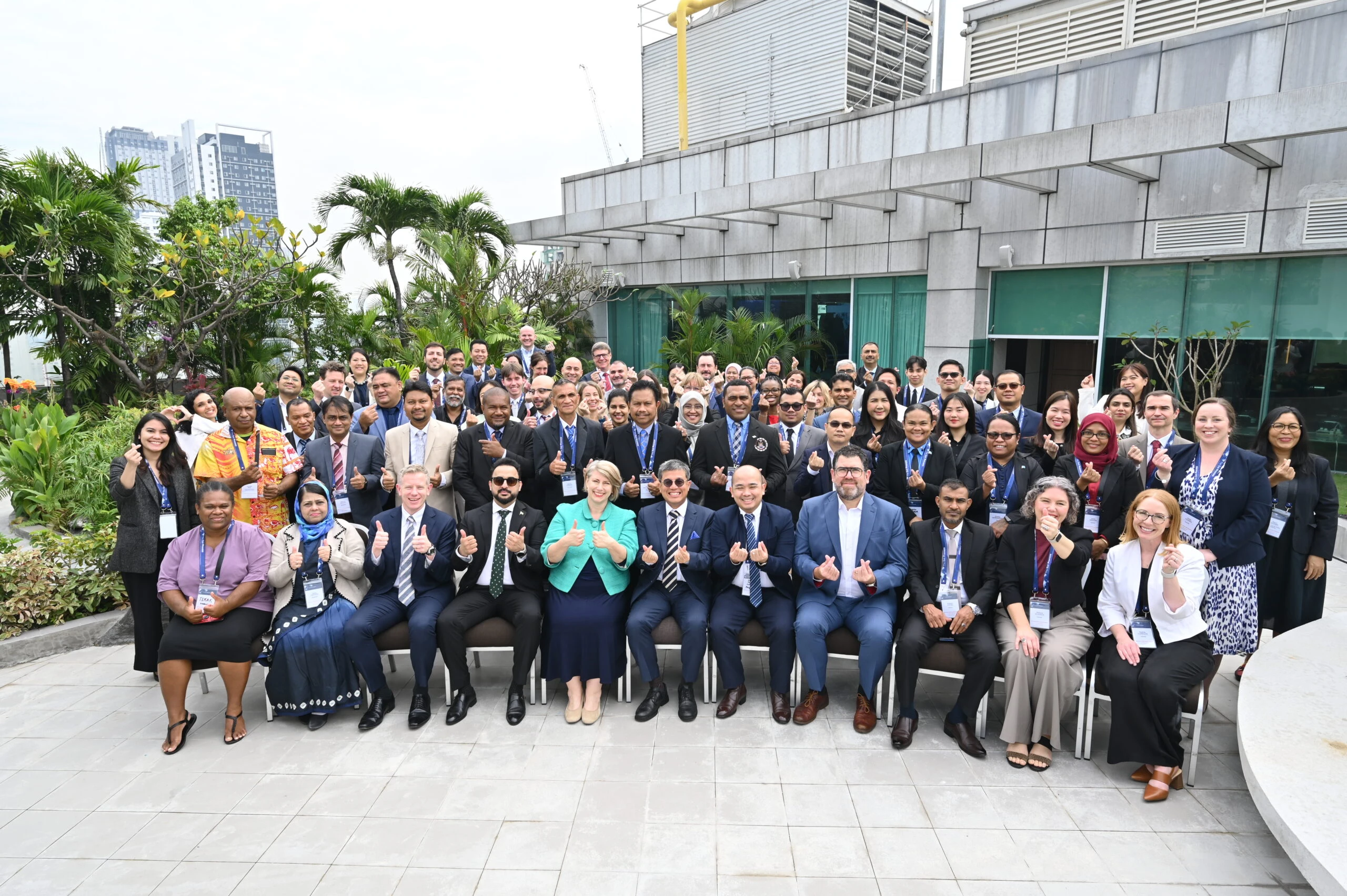
From 1 to 5 December 2025, Bali Process members and observers convened in Manila for a full week of engagements hosted by the Working Group on Trafficking in Persons (WG-TIP) and the Technical Experts Group on Returns and Reintegration (TEG-RR). The meetings brought together government officials, regional organisations, and technical experts to strengthen cooperation, share emerging trends, and advance practical approaches to combatting trafficking in persons and supporting sustainable returns and reintegration.
WG-TIP Eleventh Annual Meeting – 1 December 2025
The Eleventh Annual Meeting of the WG-TIP opened with member and observer statements highlighting national developments, challenges, and progress under the WG-TIP Forward Work Plan. Delegates exchanged updates on emerging regional trends, including the growing influence of online scam centres, illicit financial systems, and transnational organised crime.
Presentations from UNODC, the Philippines, GI-TOC, ASEAN-ACT, and Fiji examined thematic issues such as:
-
global implications of scam operations and underground banking,
-
intersections between forced marriage and trafficking,
-
trafficking in the fishing sector, and
-
related people-smuggling and IUU fishing concerns.
Break-out discussions focused on strengthening intelligence sharing, improving strategic awareness, and identifying priority areas for tailored regional capacity building. The meeting closed with a reaffirmation of continued collaboration under the Forward Work Plan.
Joint WG-TIP & TEG-RR Regional Event:
On the second day, WG-TIP and TEG-RR convened a joint regional event exploring holistic approaches across prevention, protection, and sustainable returns. The event brought together practitioners from governments, international organisations, civil society, and the private sector.
Key sessions examined:
-
safe and decent migration pathways as a core prevention strategy,
-
pre-departure counselling and information needs,
-
strengthening law enforcement cooperation,
-
improving victim identification practices—particularly relating to forced criminality online,
-
access to remedy and justice for migrant workers, and
-
the role of cross-sector collaboration in return and reintegration processes.
Interactive “market stalls” allowed participants to connect with regional mechanisms including IGC, IJM, PIDC, IOM, ASEAN-ACT, and the RSO.
The day concluded with discussions on embedding frontline and survivor experience into policy design to strengthen long-term responses.
Joint WG-TIP & TEG-RR Site Visit Programme – 3 December 2025
Participants undertook a full-day programme of study visits hosted by the Philippines Department of Migrant Workers and partner agencies. The programme included a plenary session on the Philippines’ decade-long Tier 1 ranking in the U.S. Trafficking in Persons Report. Delegates then visited four specialised sites demonstrating whole-of-government anti-trafficking efforts, including:
-
UP Manila Centre for Gender and Women Studies, focusing on trauma counselling and gender-responsive services;
-
Nasdake Building, a transformed centre that hosts social welfare programmes and a custodial facility addressing cyber-enabled trafficking;
-
BI I-PROBES and the NAIA Task Force Against Trafficking, presenting airport-based identification and referral processes for trafficking victims;
-
Philippine Coast Guard, highlighting maritime anti-trafficking operations and border enforcement work.
TEG-RR Eighth Annual Meeting – 4–5 December 2025
The TEG-RR convened for its Eighth Annual Meeting, focusing on strengthening policies and programs for safe and dignified return and sustainable reintegration. Discussions covered:
-
pre-departure support, coordination mechanisms, and arrival processes;
-
member updates for Volume II of the Returns and Reintegration Register;
-
sustainable reintegration initiatives across the region;
-
development of a new programme under Forward Work Plan Activity 1;
-
data and biometrics innovations; and
-
emerging regional data practices, including the 4Mi returns research and PIDC’s Reporting and Information Sharing Platform.
The RSO provided updates on its forthcoming Returns and Reintegration Policy Guide refresh and outlined priority areas leading into 2026. The meeting concluded with renewed commitment to enhancing cooperation and strengthening evidence-based approaches to returns and reintegration.
Overall Outcomes
Across five days of meetings and site engagements, participants:
-
deepened regional understanding of emerging trafficking trends, including cyber-enabled criminality;
-
shared operational challenges and practical tools to strengthen prevention, protection, and prosecution efforts;
-
advanced regional conversations on sustainable reintegration and data-informed approaches;
-
identified priority areas for future WG-TIP and TEG-RR collaboration; and
-
reaffirmed the value of cross-sector partnerships in addressing all stages of the trafficking cycle.
These engagements continue to reinforce the Bali Process’ commitment to promoting coordinated, practical, and people-centred responses to trafficking in persons and related transnational crimes.